The foot pain you've learned to live with has a name.
Patients Back on Their Feet
Since our first clinic opened
Would Recommend to a Friend
Based on post-treatment surveys
Average Suffering Before First Visit
Most people wait too long.
Most people wait too long. Let's find out where you stand — in 60 seconds.
Four questions that change
everything.
This is how we think. Scroll through the assessment you'd get in our clinic — one layer at a time.
Where does it hurt?
Pain location is the first diagnostic clue. Heel pain at first morning step is almost never "just soreness." Ball-of-foot burning that worsens in shoes has a different cause than arch ache after long walks.
Our interactive assessment maps your pain to the five most common anatomical sites — each with a distinct treatment path. Knowing the zip code of your pain cuts diagnosis time in half.

When did it start?
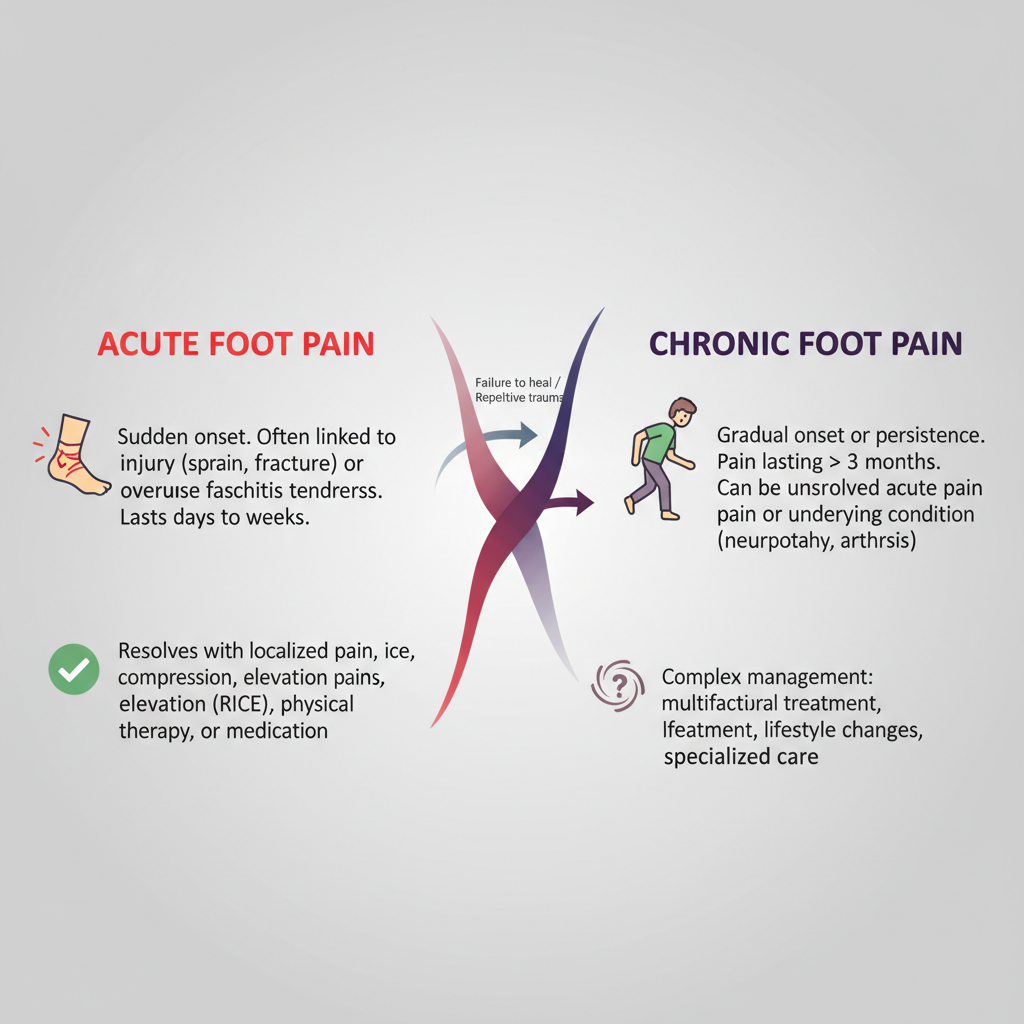
Acute pain (sudden onset, specific moment) and chronic pain (slow build over months) follow completely different healing timelines. The construction foreman whose heel started aching six months ago is not the same case as the runner who twisted her ankle last Tuesday.
Duration shapes treatment: acute injuries often respond to targeted conservative care in 4–6 weeks. Chronic conditions that have reorganized the surrounding tissue require a staged protocol. We map yours from day one.
What have you tried?
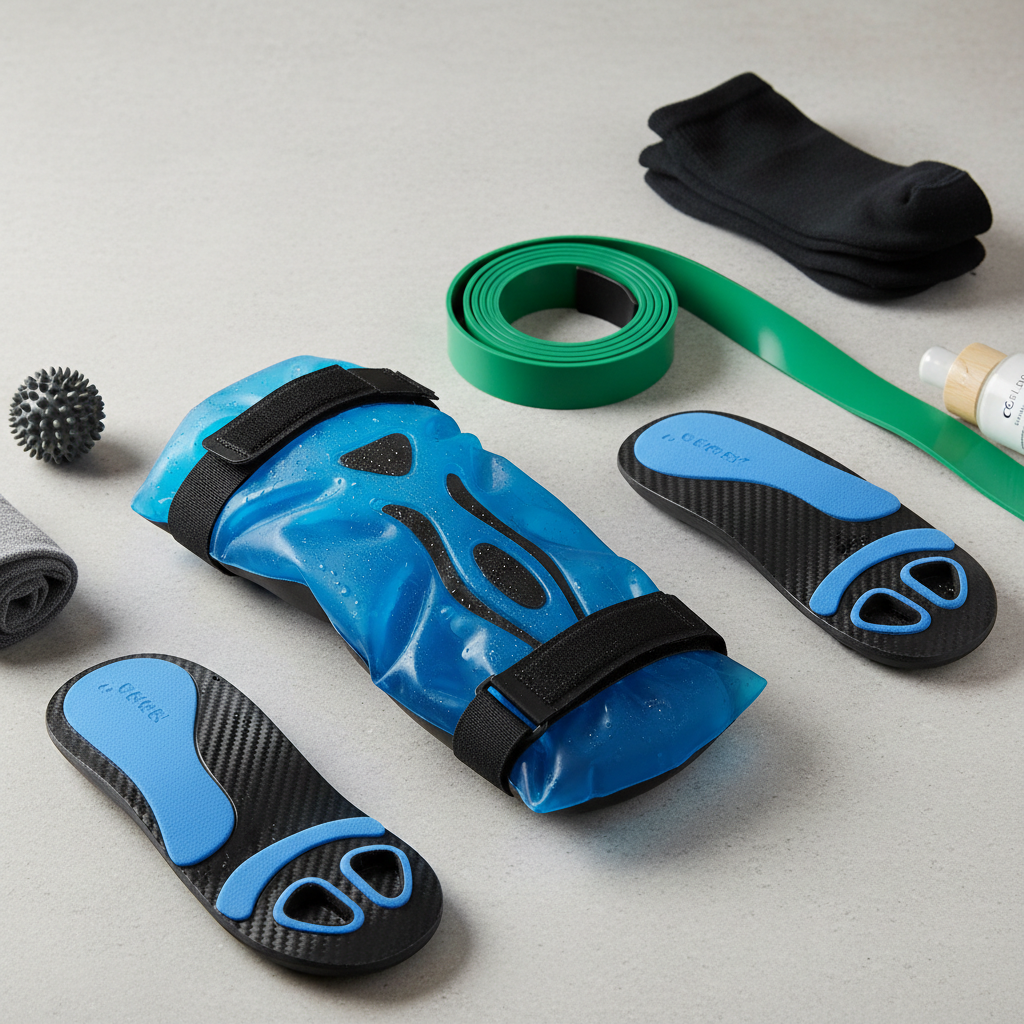
Ice, ibuprofen, stretching, new shoes, night splints, cortisone shots — the average patient arriving at Gait has tried 3.7 treatments before their first visit. Most plateau not because the treatment was wrong, but because it addressed the symptom, not the structure.
We document what you've tried and why it helped or didn't. This isn't judgment — it's precision. Your treatment history is the fastest path to your next step forward.
What's actually happening?
Most foot pain has a structural explanation that's invisible to the naked eye but clear on imaging and clinical exam. Plantar fasciitis is inflammation of a band of tissue, not "heel spur." A neuroma is a nerve trapped between metatarsals, not just numbness.
We explain what we find in plain language — no Latin, no rushed 8-minute appointment. You leave understanding your foot the way a surgeon does: exactly what's happening, exactly why, exactly what changes it.
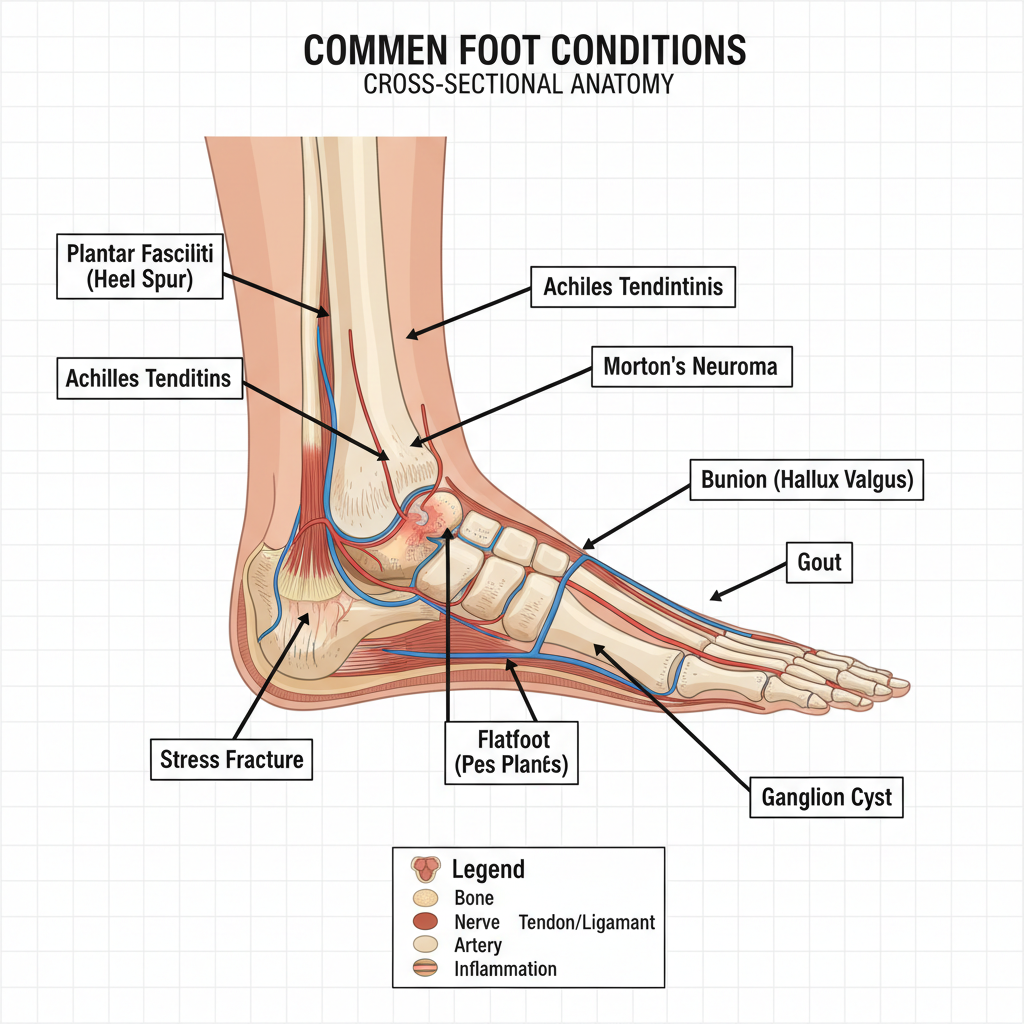
What your feet are trying to tell you.
Annotated, honest, and written for someone who's been Googling symptoms at 11pm.
"Heel spur pain"
Plantar Fasciitis
Inflammation of the thick band of tissue running along the bottom of your foot. The signature sign: stabbing pain with your very first steps in the morning.
Signs
- First-step morning pain
- Heel ache after long standing
- Tight arch after sitting
Recovery
6–18 weeks with proper care
Who Gets It
Runners, retail workers, teachers, anyone on hard floors all day
"Back-of-heel pain"
Achilles Tendinopathy
Degeneration or inflammation of the Achilles tendon — the body's strongest but most temperamental rope. Runners feel it as stiffness that "warms up" but never quite goes away.
Signs
- Morning stiffness
- Pain 2–6 cm above heel
- Thickened tendon
- Worse on hills
Recovery
3–6 months for chronic cases
Who Gets It
Weekend runners, cyclists, anyone who increased mileage too fast
"Stone in the shoe feeling"
Morton's Neuroma
A thickening of tissue around a nerve between the toes, most often between the third and fourth. The sensation: a pebble that never quite leaves, burning that improves when you take your shoes off.
Signs
- Burning between toes
- Numbness in 3rd–4th toes
- Pain in narrow shoes
- Clicking sensation
Recovery
4–12 weeks conservative; surgery if needed
Who Gets It
Women in narrow footwear, high-heeled shoe wearers, forefoot runners
"That bump on my big toe"
Hallux Valgus (Bunion)
A progressive deformity where the big toe angles toward the second toe, creating a bony prominence. Every shoe becomes a negotiation. The retired teacher who finally couldn't argue with her closet anymore — this is her.
Signs
- Bony bump at big toe base
- Redness and swelling
- Pain in shoes
- Restricted toe movement
Recovery
6–8 weeks post-surgery if indicated
Who Gets It
Hereditary predisposition, narrow footwear, women 3:1 ratio over men
"Numbness and burning"
Diabetic Peripheral Neuropathy
Nerve damage from chronically elevated blood sugar creates numbness, tingling, or burning — often described as walking on sand or wearing invisible socks. The stakes are highest here: injuries go unfelt until they become serious.
Signs
- Numbness or tingling
- Burning or freezing sensation
- Loss of balance
- Wounds that don't heal
Recovery
Managed, not cured — prevention is the goal
Who Gets It
Type 1 and Type 2 diabetics, those with pre-diabetes
Real people. Real feet. Real results.
97%
would recommend Gait

Maria Castellano
Middle school soccer coach, Naperville
"Six months of limping through grocery runs, two urgent cares, a podiatrist who gave me a cortisone shot and called it done. Then Gait. They explained my plantar fascia in fifteen minutes better than anyone had in half a year. I was back on the sideline in eight weeks."

Derek Okafor
Construction foreman, Chicago South Side
"I dreaded the alarm every morning because the first ten steps were the worst part of my day. My crew noticed before I admitted it. The team at Gait figured out it wasn't just fasciitis — I had a heel stress reaction nobody caught. Treatment plan started that same week."

Ruth Henningsen
Retired teacher, Evanston
"My bunion finally won the argument with every shoe I owned. I'd been told surgery was the only option, then told to wait, then told to lose weight. At Gait they actually looked at my gait — imagine that — and gave me a staged plan. The surgery was the last step, not the first conversation."
Free Guide
The 5 Conditions Your Feet Are Trying to Tell You About
Take the guide home first.
A plain-language PDF covering the five most common foot conditions — what they are, what causes them, and what actually helps. Written by surgeons who've stopped using jargon.